Approaching and removing ☽ Moon to Earth 2026

Nothing in the universe stands still. Any body, whether it's a planet, a star, a galaxy or just a piece of a meteorite, moves relative to other bodies. The observer, being on the Earth, can observe from time to time how the planets of the solar system moving in their orbits come close to each other and such a phenomenon in astronomy is called a conjunction. This, of course, does not mean that the planets and in space are converging with each other, they are just visible in one direction from the Earth and this convergence is seeming.
In relation to Earth, the outer (or upper) planets are located farther from the Sun than the Earth (Mars, Jupiter, Saturn, Uranus, Neptune) and the lower planets (Mercury and Venus). In this case, for example, for Mercury all planets will be external, for Neptune - all planets are internal. Earth is an outer planet from the point of view of Venus and the inner planet from the point of view of Mars.
Connections can also occur between planets or between the Moon and one or more planets, but in this case the term is often used more freely, with an accuracy of a few degrees.
The upper connection is the point of the orbit of Mercury or Venus, when the planet, when viewed from the Earth, lies behind the Sun.
The lower connection is the position of the planets of Mercury or Venus, when they are directly between the Earth and the Sun. Because of the relative slope of the planetary orbits, the actual passage of Mercury or Venus over the disk of the Sun is quite rare. Usually during the lower connections of the planet pass in the sky to the north or south of the Sun.
The period when the outer planet is closest to the Earth is called a confrontation. The time interval between two oppositions of the same planet is more than a year (the period during which the Earth must make one revolution, after which it "catch up" with the planet, which also did not stand still). The opposition of Mars occurs every 26 months (ie less than once in 2 years), and the confrontation of Neptune - once in 367 days.
If the orbits of all the planets were exactly circular, during the confrontations the distance between the planets during the oppositions would always be the same. However, all the bodies of the solar system (including the Earth) move around the sun along elliptical orbits, then approaching it, then retiring. The nearest point to the Sun of the orbit of the celestial body is called the perihelion, and the most distant point is the aphelion. The apparent dimensions of Mars are maximal during the great oppositions, when the Earth is in aphelion, and Mars is near the perihelion of its orbit. City Kabul.
| Event date | a type | distance to Earth |
| 02-01-2026 02:21:16 fr | perimenty | 360 360,91 km |
| 14-01-2026 01:22:37 we | apogey | 405 404,81 km |
| 30-01-2026 02:24:12 fr | perimenty | 365 894,24 km |
| 10-02-2026 21:23:32 tu | apogey | 404 536,97 km |
| 25-02-2026 03:47:02 we | perimenty | 370 171,77 km |
| 10-03-2026 18:11:40 tu | apogey | 404 344,59 km |
| 22-03-2026 16:01:22 su | perimenty | 366 883,63 km |
| 07-04-2026 12:56:00 tu | apogey | 404 935,48 km |
| 19-04-2026 11:18:10 su | perimenty | 361 645,60 km |
| 05-05-2026 02:50:06 tu | apogey | 405 815,51 km |
| 17-05-2026 18:07:20 su | perimenty | 358 081,90 km |
| 01-06-2026 08:46:50 mo | apogey | 406 359,50 km |
| 15-06-2026 03:43:06 mo | perimenty | 357 195,38 km |
| 28-06-2026 11:26:44 su | apogey | 406 277,73 km |
| 13-07-2026 12:19:59 mo | perimenty | 359 102,94 km |
| 25-07-2026 21:07:13 sa | apogey | 405 575,13 km |
| 10-08-2026 15:40:11 mo | perimenty | 363 265,32 km |
| 22-08-2026 12:46:44 sa | apogey | 404 678,00 km |
| 07-09-2026 01:04:24 mo | perimenty | 368 228,33 km |
| 19-09-2026 07:29:50 sa | apogey | 404 260,63 km |
| 02-10-2026 01:29:20 fr | perimenty | 369 300,83 km |
| 17-10-2026 03:28:42 sa | apogey | 404 680,60 km |
| 28-10-2026 22:43:34 we | perimenty | 364 386,43 km |
| 13-11-2026 22:27:17 fr | apogey | 405 649,54 km |
| 26-11-2026 01:37:59 th | perimenty | 359 336,04 km |
| 11-12-2026 11:28:35 fr | apogey | 406 436,07 km |
| 24-12-2026 13:07:33 th | perimenty | 356 647,66 km |
 ☽ Moon ☉ Sun ☿ Mercury ♀ Venus ♂ Mars ♃ Jupiter ♄ Saturn ♅ Uranus ♆ Neptune ♇ Pluto
Moon without a course
The time of the Moon without course is unfavorable for those cases that are aimed at concrete results. Go
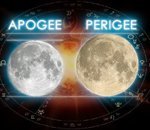
Apogee and perigee of the Moon
Perigee is the point of the orbit in which the Moon approaches as close as possible to the Earth, and the apogee, on the contrary, is remote. Go

Sunrise sunset today
Select the desired date in the calendar and find out information about the sunrise and sunset of the Sun and other planets. Go
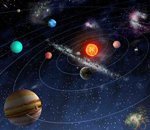
The current position of the planets
This astrological service allows you to calculate the current position of the planets of the solar system. Go
The day of equinox and solstice 2026
The astronomical seasons do not coincide with the calendar and are replaced in the days of the solstice and equinox. Go